
How to Prepare for Your First Art Market


Taking your artwork from your studio and selling it at your first art market is
incredibly exciting — but it can also feel a little overwhelming.
How much stock do you need? What should your table look like? How do you take payments? And, perhaps most importantly, how do you actually get people to stop and look at your work?
After doing art markets myself, I’ve learned that a little preparation goes a long way. So, if you’re getting ready for your first market, here are some of the things I’d recommend thinking about.

1. Plan what you’re going to sell
Before you start packing boxes of artwork, think about what you actually want to take with you.
Will you be selling prints, original artwork, cards, stickers, ceramics, frames or other products? Try to create a selection at different price points so there’s something for different budgets.
It can also help to think about your bestsellers. If you already sell online, take some of your most popular pieces. If it’s your first market and you don't know what will sell, don't worry — think of it as a chance to learn.
Markets are brilliant for finding out which designs people are naturally drawn to.
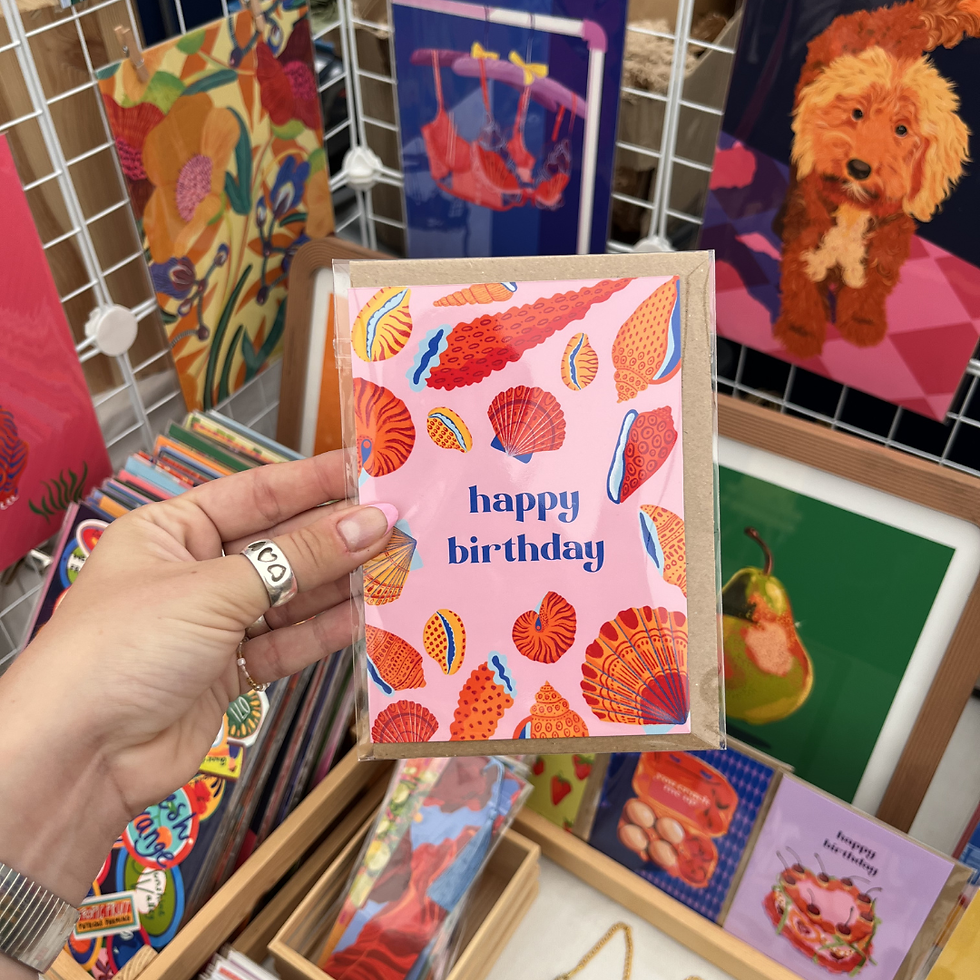
2. Don't underestimate your stock
One of the trickiest things about your first market is working out how much stock to bring.
You don't want to bring so much that you're surrounded by boxes, but you also don't want to sell out in the first hour!
Make a simple stock list before the day and keep track of what you have with you. This will make it much easier to see what you've sold and what you need to replenish afterwards.
And remember: you don't have to display everything you bring.
Having extra stock underneath your table means you can refill as things sell without making your stall look overcrowded.

3. Think about your table as a tiny shop
Your market table is essentially your shop for the day, so think about how you want it to feel.
If your artwork is colourful and fun, let that personality come through in your display.
Think about:
Tablecloths or runners
Risers and shelves to create different heights
Print stands
Baskets or trays for smaller products
Clear pricing
Your business name
A sign or banner
Try to avoid having everything completely flat on the table. Creating different levels helps your products catch people's attention and makes it easier for shoppers to see everything.
Most importantly, make sure your artwork is still the star of the show.

4. Have clear prices
This is a small thing that can make a big difference.
Make your prices easy to spot so customers don't have to ask how much everything costs.
Some people will happily ask, but others might simply walk away if they can't work out the price.
You can use little price cards, stickers or one larger sign if several products have the same price.
And don't forget to price your work confidently. Your time, creativity, materials, packaging and experience all have value.

5. Make payments easy
It's a good idea to be prepared for different ways of paying.
Card payments are incredibly useful at markets, but it's also worth having a backup option. Make sure your card reader is fully charged and, if possible, bring a portable power bank.
If you accept cash, take some change.
You might also want a QR code linking to your Etsy shop or website, especially if someone likes your work but isn't ready to buy on the day.

6. Bring the boring stuff!
There are always those little things you don't think about until you need them.
Create a market-day checklist and include things like:
Card reader
Phone
Power bank and charging cables
Cash and change
Packaging and bags
Business cards
Price signs
Tape
Scissors
Pens
Water and snacks
Hand sanitiser
A chair, if the market doesn't provide one
It sounds obvious, but being prepared for the little things can make the whole day much less stressful.

7. Don't forget your packaging
Packaging is part of the experience.
If someone has bought a beautiful piece of artwork from you, make sure they can get it home safely.
Think about how you'll package different products and make sure everything is protected, especially prints and original artwork.
You can also use your packaging as another opportunity to show off your brand.
Even a simple sticker, stamp or thank-you card can make an order feel extra special.

8. Practice your pitch — but don't overthink it
One of the biggest worries for first-time market sellers is talking to customers.
What do you say?
The good news is that you don't need a rehearsed sales pitch.
A friendly "hello" and a smile is usually enough to start with. If someone is looking at your artwork, you can tell them a little about the piece or how you made it.
Don't be afraid to let people browse either. Sometimes customers just want a little time to look.
Your enthusiasm for your work is often the best sales pitch you have.

9. Make it easy for people to find you afterwards
Not everyone who visits your stall will buy something that day — and that's completely okay.
Make sure people can find you online afterwards.
Have your Instagram, Etsy shop or website clearly displayed and consider having a QR code on your table.
Someone might spot your work at a market, go home, think about it and then place an order later.
Your market isn't just about the sales you make that day. It's also about introducing new people to your work and building relationships with future customers.

10. Enjoy it!
This might be the most important tip of all.
Your first art market doesn't need to be perfect.
Your display might not look exactly how you imagined. You might forget something.
You might sell more of one product than another. You might discover that customers love a design you weren't expecting them to notice.
That's all part of it.
An art market is a brilliant opportunity to meet other creatives, talk to people who love your work and learn more about your customers.
So take a deep breath, put your artwork on the table and enjoy seeing your illustrations out in the world.
Your first market is the beginning of a learning process, not a test you have to pass.
And who knows? You might just discover that you absolutely love it!
Emily
Find me on social media:


Comments